
FLOW Trial: Semaglutide and 24% Fewer Kidney Events The first dedicated GLP-1 kidney-outcomes trial in type 2 diabetes and CKD
Keywords:
FLOW trial, Semaglutide, Major‑kidney events, eGFR slope preservation, MACE and mortality, Low NNTsAbstract
Abstract
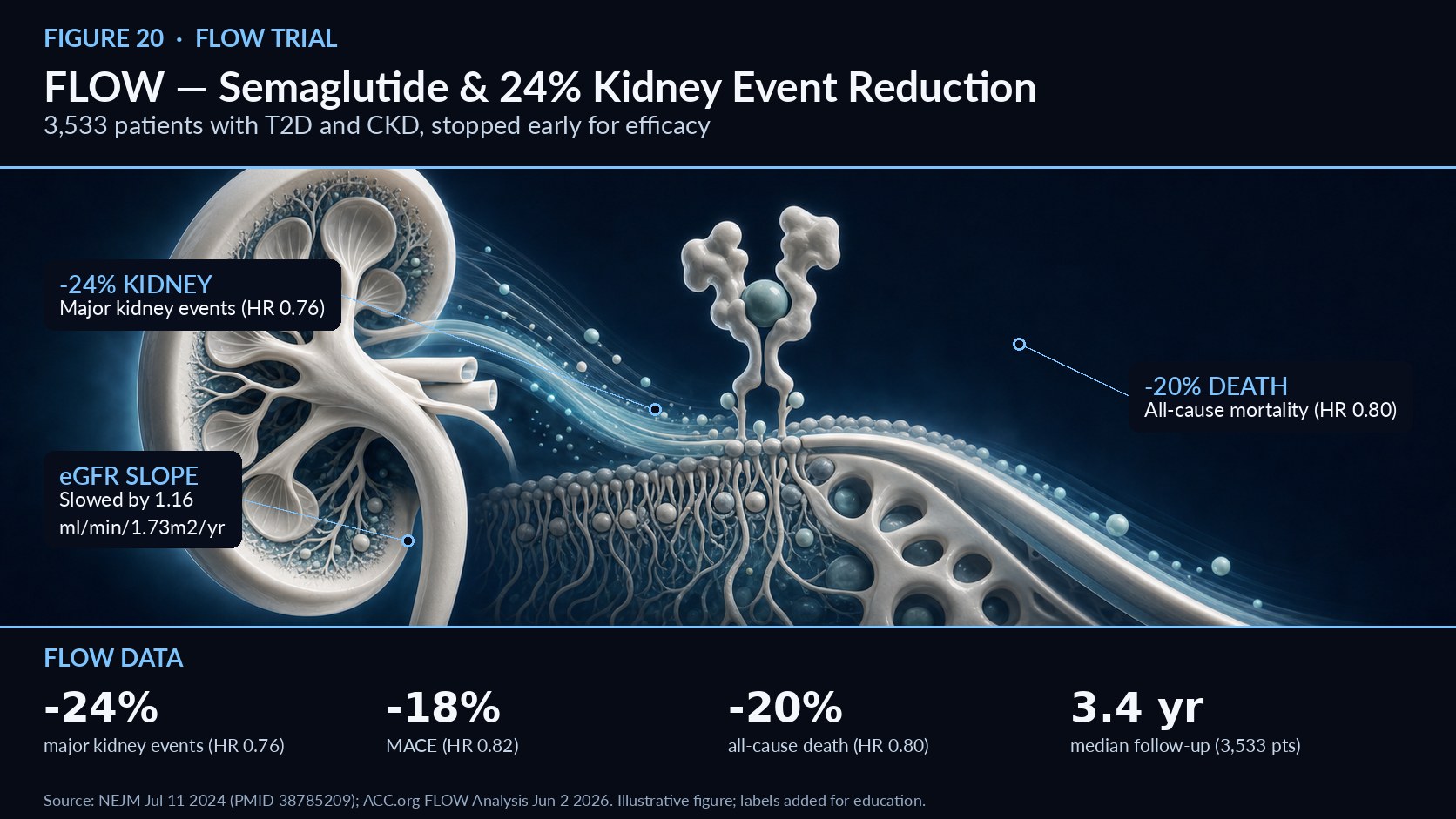
FLOW (NCT03819153) was the first dedicated kidney‑outcomes trial of a GLP‑1 receptor agonist, randomising 3,533 adults with type 2 diabetes and chronic kidney disease to once‑weekly semaglutide 1.0 mg or placebo with a median follow‑up of 3.4 years; the trial was stopped early for efficacy.1 The primary composite kidney outcome occurred in 331 patients on semaglutide versus 410 on placebo, a 24% relative risk reduction (HR 0.76; 95% CI 0.66–0.88; P=0.0003). Semaglutide also significantly attenuated eGFR decline, slowing the mean annual slope by 1.16 mL/min/1.73 m² (P<0.001), reflecting tangible preservation of filtration over time. Concurrent cardiovascular benefits included an 18% reduction in MACE (HR 0.82) and a 20% reduction in all‑cause mortality (HR 0.80), with cardiovascular‑cause death reduced (HR 0.71). Serious adverse events were fewer with semaglutide than placebo (49.6% vs 53.8%), supporting a favourable benefit‑risk profile. A 2026 subgroup analysis confirmed consistent kidney and mortality effects across patients with and without ASCVD and heart failure, and the trial yielded low numbers needed to treat (eg, 13–22 across subgroups) over three years. As the first GLP‑1 trial powered for renal endpoints, FLOW advances semaglutide from secondary signal to proven renoprotective therapy, justifying guideline recommendations to consider GLP‑1 agents for persistent albuminuria alongside RAS blockade and SGLT2 inhibition. FLOW’s early stop for efficacy underscores the robustness and clinical importance of the kidney benefit