
Vol. 4 No. 24 (2026): Weight Regain After Stopping GLP-1s Why obesity pharmacotherapy is long-term, disease-modifying treatment
Description
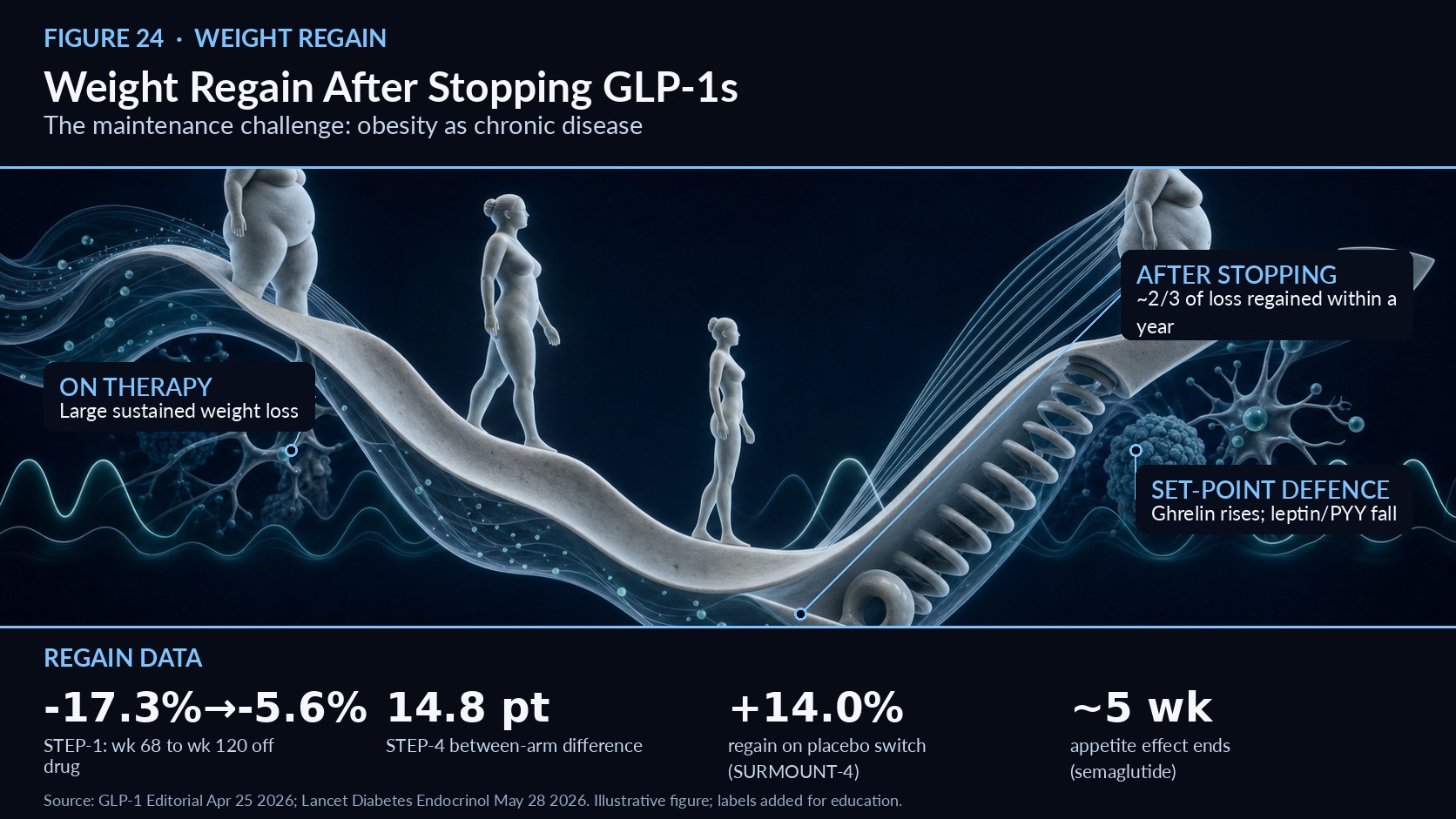
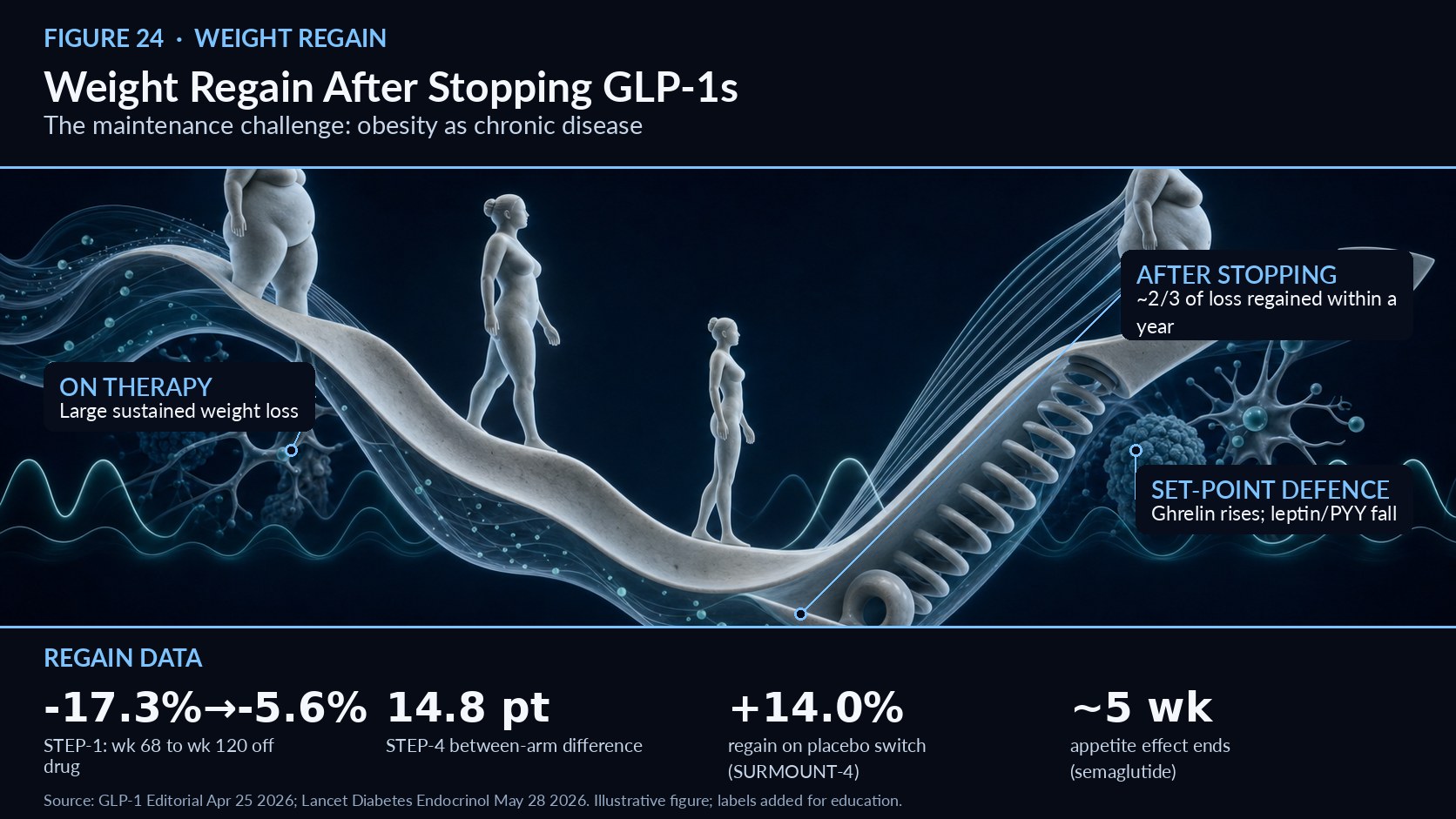
Evidence from STEP‑1, STEP‑4, and SURMOUNT‑4 shows that stopping GLP‑1 or multiagonist therapy commonly causes substantial weight regain and reversal of cardiometabolic gains. In STEP‑1’s extension, semaglutide participants lost −17.3% at week 68 but lost only −5.6% at week 120 after discontinuation, recouping roughly two‑thirds of lost weight within a year. STEP‑4 and SURMOUNT‑4 provide controlled confirmation: continued therapy produced further loss while placebo‑switch arms rapidly regained weight (between‑arm differences ~14.8 percentage points and 19.5 percentage points, respectively). Metabolic markers—waist circumference, blood pressure, HbA1c, lipids—reverted alongside weight. Mechanistically, appetite returns within weeks, and adaptive thermogenesis plus hormonal shifts (↑ghrelin, ↓leptin/PYY) defend a higher set point, making relapse biological rather than behavioural. These findings support framing obesity pharmacotherapy as a long‑term, disease‑modifying treatment that requires planning for sustained use, monitoring for safety, and realistic patient counselling—especially where cost and access constrain continuous therapy.