
Vol. 4 No. 14 (2026): SGLT2 Inhibitors: Cardiorenal Mechanisms How a glucose-lowering drug became a foundational heart and kidney therapy
Description
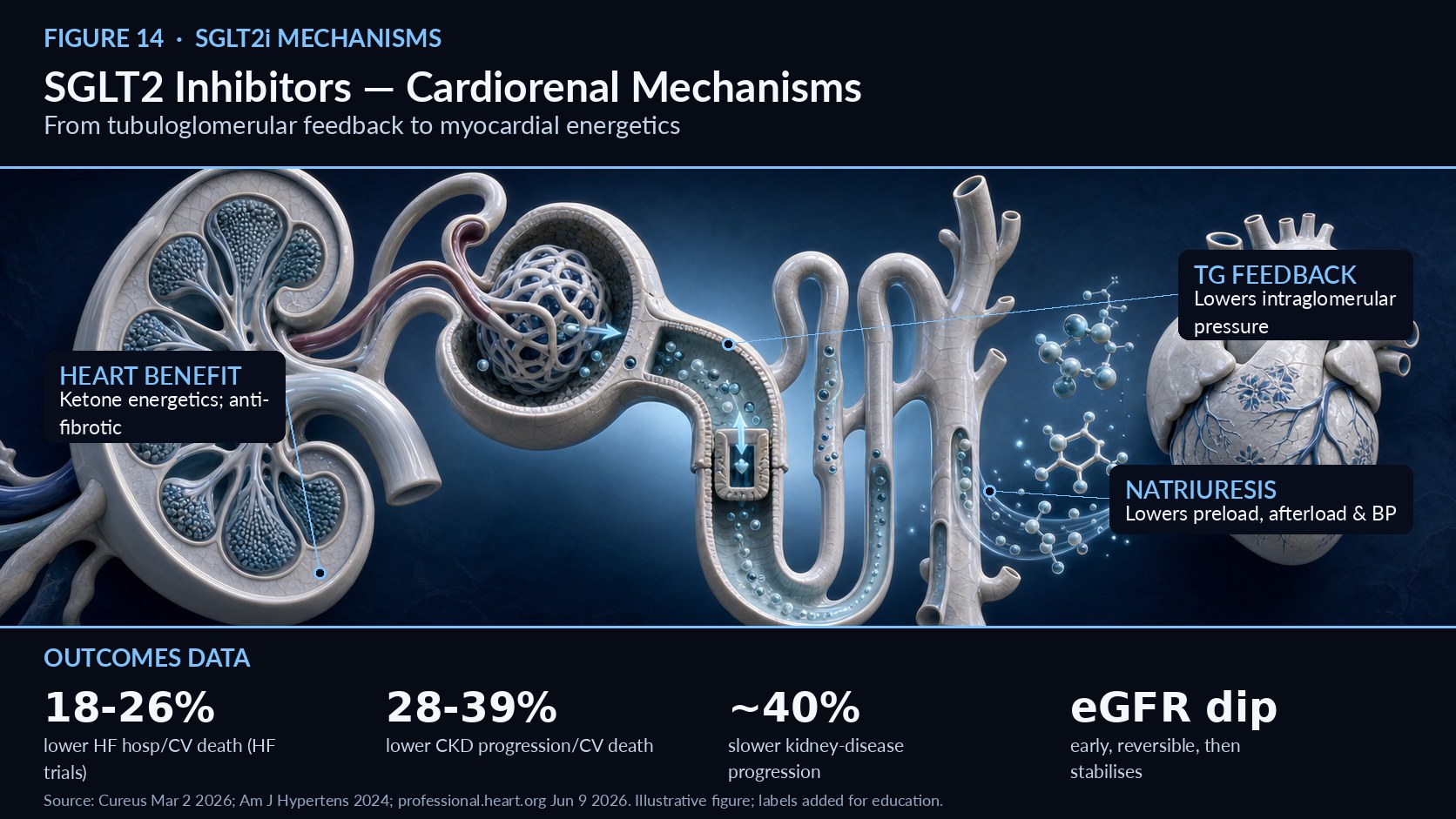
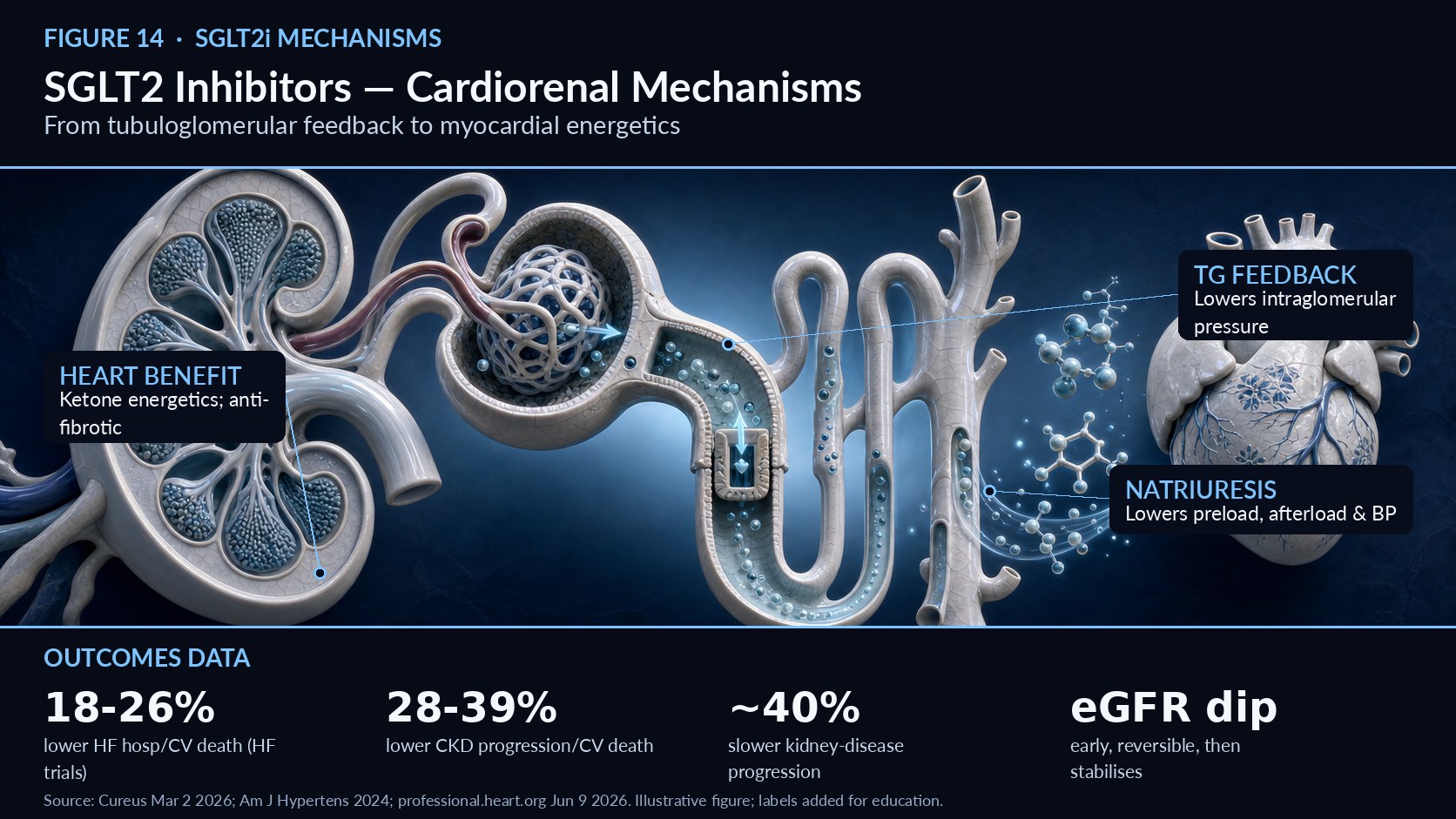
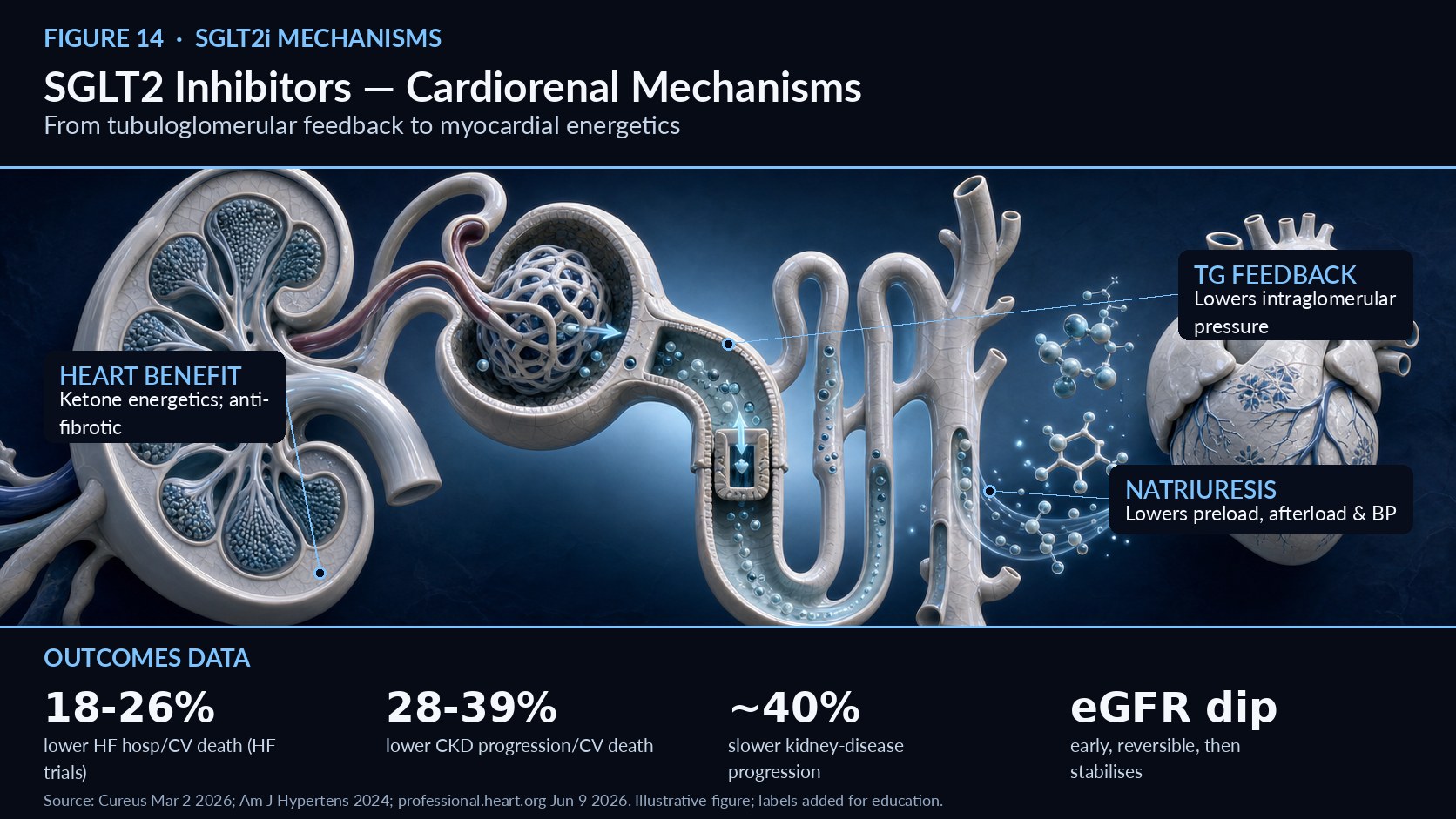
SGLT2 inhibitors have evolved from glucose-lowering agents into foundational cardiorenal therapies because their benefits extend well beyond glycaemic control. In the kidney, they restore feedback by increasing sodium delivery to the macula densa, causing afferent arteriolar vasoconstriction, lowering intraglomerular pressure, and reducing hyperfiltration injury. This explains the early, modest eGFR dip after treatment initiation, a hemodynamic effect that stabilizes and is followed by slower long-term kidney decline. In the heart, natriuresis and osmotic diuresis reduce plasma volume, blood pressure, and ventricular filling pressures, while additional effects on myocardial energetics, inflammation, fibrosis, uric acid, and oxidative stress contribute to protection. Clinical trials confirm these mechanisms, showing consistent reductions in heart-failure hospitalization, cardiovascular death, and CKD progression, with benefits extending to patients with and without diabetes. The 2026 CKM guideline now places SGLT2 inhibitors at the center of guideline-directed therapy, including first-line use in HFmrEF and HFpEF, reflecting their dual heart and kidney protection.