
GLP-1s and Multi-Organ Benefits: The Lancet 2026 Review Synthesising weight-loss-independent effects across ten organ systems
Keywords:
GLP‑1 receptor agonists, Weight‑loss‑independent effects, Cardiorenal protection, Multisystem benefits, Multiagonist therapiesAbstract
Abstract
Background: Recent large trials and meta-analyses suggest incretin‑based and multiagonist obesity medications deliver organ‑level benefits that cannot be fully explained by weight loss alone. This review synthesises randomised trial, meta‑analytic, and mechanistic evidence for multisystem effects of GLP‑1 receptor agonists and related agents.
Methods and scope: Savas et al. critically appraise evidence for phentermine‑topiramate, naltrexone‑bupropion, and a range of GLP‑1–based therapies (liraglutide, semaglutide, tirzepatide, survodutide, mazdutide, retatrutide, cagrilintide‑semaglutide, amycretin), focusing on outcomes in ten organ systems: glycaemic control/type 2 diabetes, MASLD, chronic kidney disease, heart failure, cardiovascular disease, obstructive sleep apnoea, PCOS, osteoarthritis, skeletal muscle, depression, and neurodegenerative disorders.
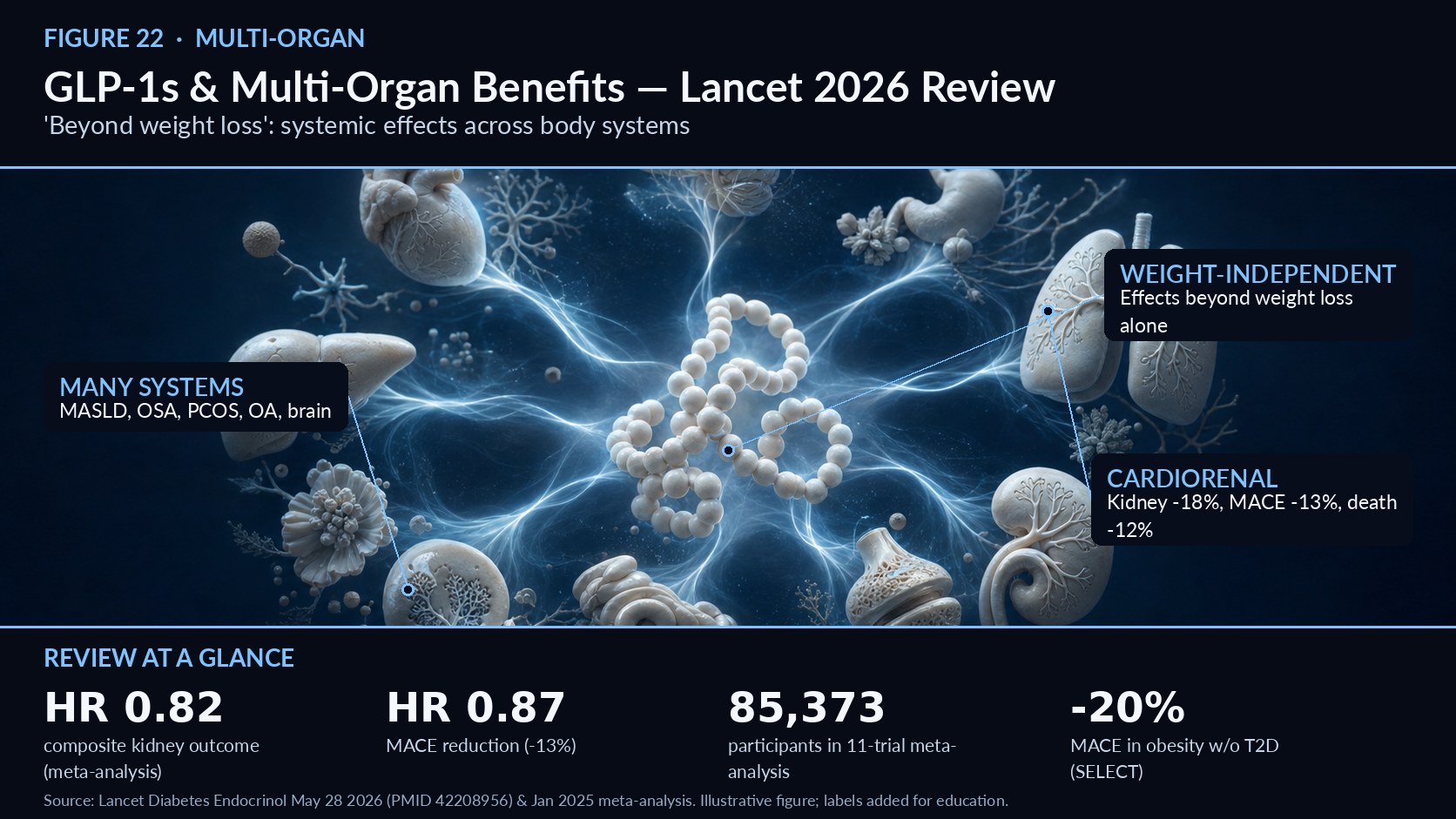
Findings: Aggregated trial data, including a meta‑analysis of 11 trials (n≈85,373), demonstrate GLP‑1 RAs reduce composite kidney events (HR 0.82), MACE (HR 0.87), and all‑cause mortality (HR 0.88). Clinical benefits extend into non‑diabetic populations; high‑dose semaglutide lowered MACE in SELECT despite participants lacking diabetes. Mechanistic evidence implicates pleiotropic effects—anti‑inflammatory actions, direct renal and myocardial signalling, and neurohormonal modulation—contributing to outcomes independent of the magnitude of weight loss.
Conclusions: The evidence supports reframing GLP‑1 and multiagonist therapies as multi‑organ disease‑modifying agents. Recognition of weight‑loss‑independent effects strengthens the rationale for broader therapeutic use and underpins guideline shifts integrating cardiometabolic and renal care.