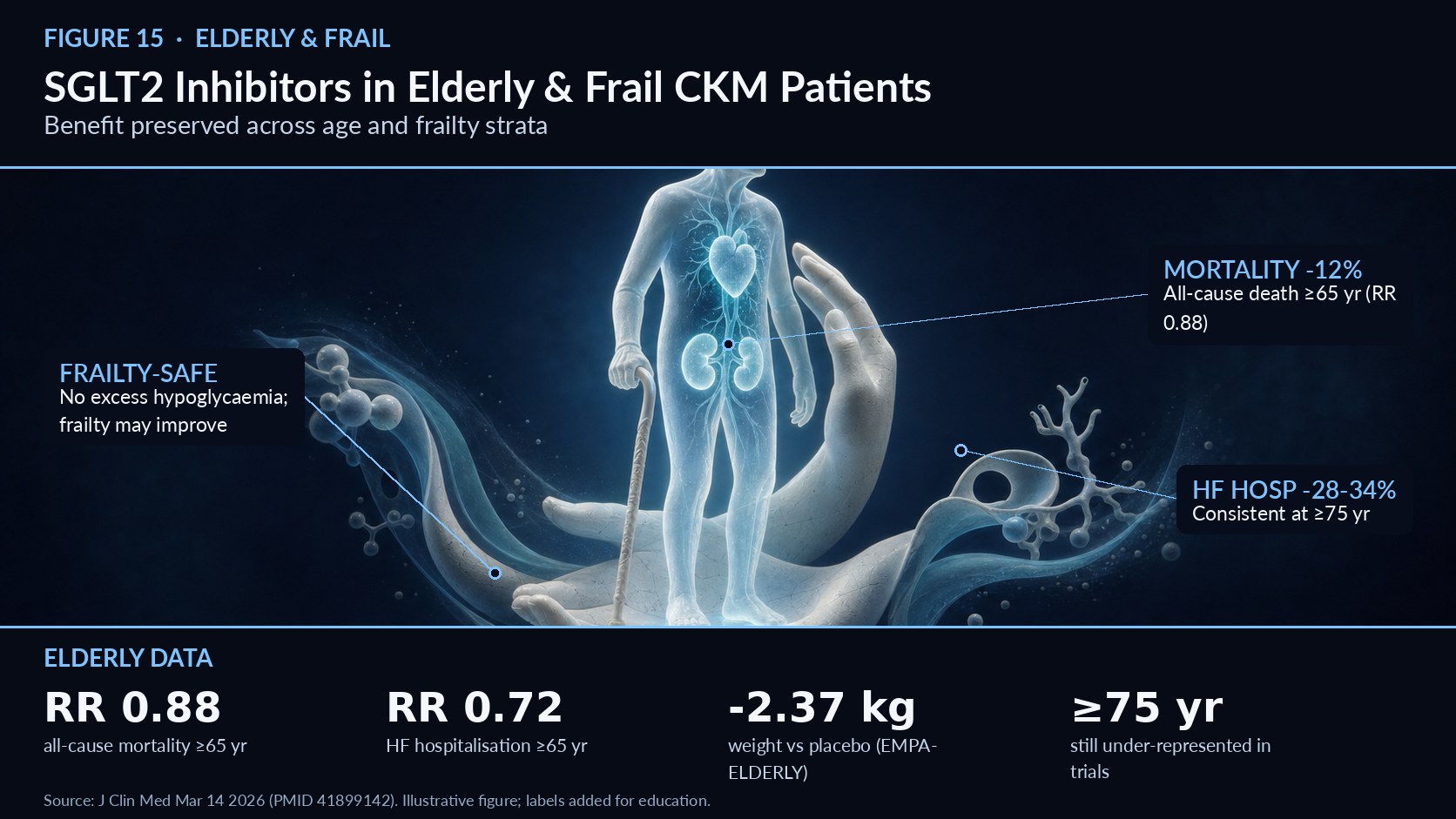

SGLT2 Inhibitors in Elderly and Frail CKM Patients Consistent benefit across age and frailty, with no excess hypoglycaemia
Keywords:
SGLT2 inhibitors, Older adults, Frailty, Hypoglycaemia risk, Heart‑failure hospitalization, Albuminuria, Acute kidney injury, Body compositionAbstract
Abstract
Recent evidence shows SGLT2 inhibitors provide consistent cardiorenal benefits in older and frail patients without excess hypoglycaemia, supporting broader use in CKM populations. A 2026 J Clin Med review found reduced all-cause mortality (RR 0.88), cardiovascular death, heart‑failure hospitalisation (RR 0.72), and MACE (RR 0.87) among adults ≥65 years, with similar or larger absolute benefits in those ≥75. Heart‑failure hospitalisation reductions of 28–34% persisted with advancing age, and frailty did not attenuate efficacy across major trials (DAPA‑HF, DELIVER, EMPEROR‑Preserved, CANVAS/CREDENCE). Safety signals were reassuring: no increased hypoglycaemia, lower albuminuria (RR 0.71), and reduced acute kidney injury (RR 0.70). Practical considerations include monitoring volume status, diuretic adjustment, and attention to nutrition and muscle mass because trials (e.g., EMPA‑ELDERLY) showed modest weight and non‑significant lean‑mass reductions. Older age and frailty should generally prompt initiation rather than withholding of SGLT2 therapy, with individualized clinical judgment for underrepresented very old or nursing‑home populations.