
Why the 2013 Obesity Guideline Was Retired A paradigm shift from weight-as-number to weight-as-driver in a multi-organ syndrome
Keywords:
obesity guideline retirement, adiposity as driver, waist circumference, BMI, metabolic surgery, obesity pharmacotherapy, CKM syndrome, cardiovascular risk, kidney disease, patient‑centred communicationAbstract
Abstract
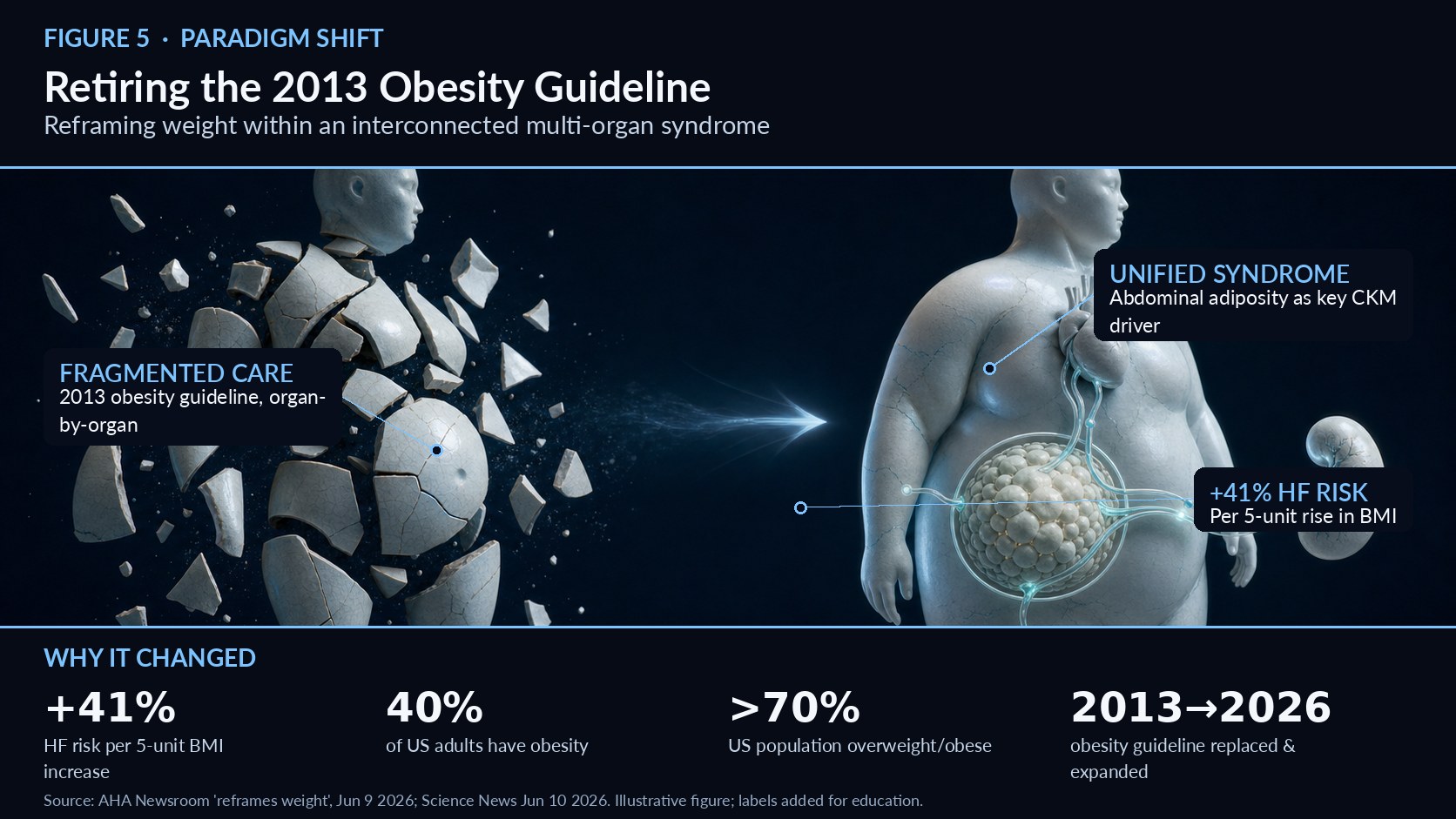
Background: The 2013 obesity guideline focused largely on weight as a numeric target. Emerging evidence and the 2026 Cardiovascular–Kidney–Metabolic (CKM) Guideline have shifted the paradigm, positioning excess adiposity—particularly abdominal/visceral fat—as a causal driver of multi‑organ disease.
Objective: To summarise reasons for retiring the 2013 document and to outline the CKM Guideline’s integrated, organ‑protective approach to assessing and treating adiposity within CKM syndrome.
Methods: We review epidemiologic associations linking incremental increases in BMI and central adiposity to heart failure, coronary events, stroke, and kidney disease, and summarise guideline recommendations to combine BMI with waist circumference, reframe weight as a driver rather than an endpoint, offer lifestyle interventions with adjunctive obesity pharmacotherapy, and refer selected patients for metabolic/bariatric surgery. We also describe guidance on non‑stigmatizing communication strategies.
Results/Conclusions: The 2026 CKM Guideline replaces the 2013 weight‑centric approach because treating adiposity as a modifiable driver better aligns prevention and treatment with downstream cardiovascular and renal benefits. Routine measurement of waist circumference, earlier use of effective pharmacotherapies, and appropriate surgical referral create opportunities to reduce CKM incidence and progression. The guideline’s patient‑centred messaging aims to reduce stigma and improve engagement, supporting broader implementation of multisystem treatments that deliver benefits beyond weight loss