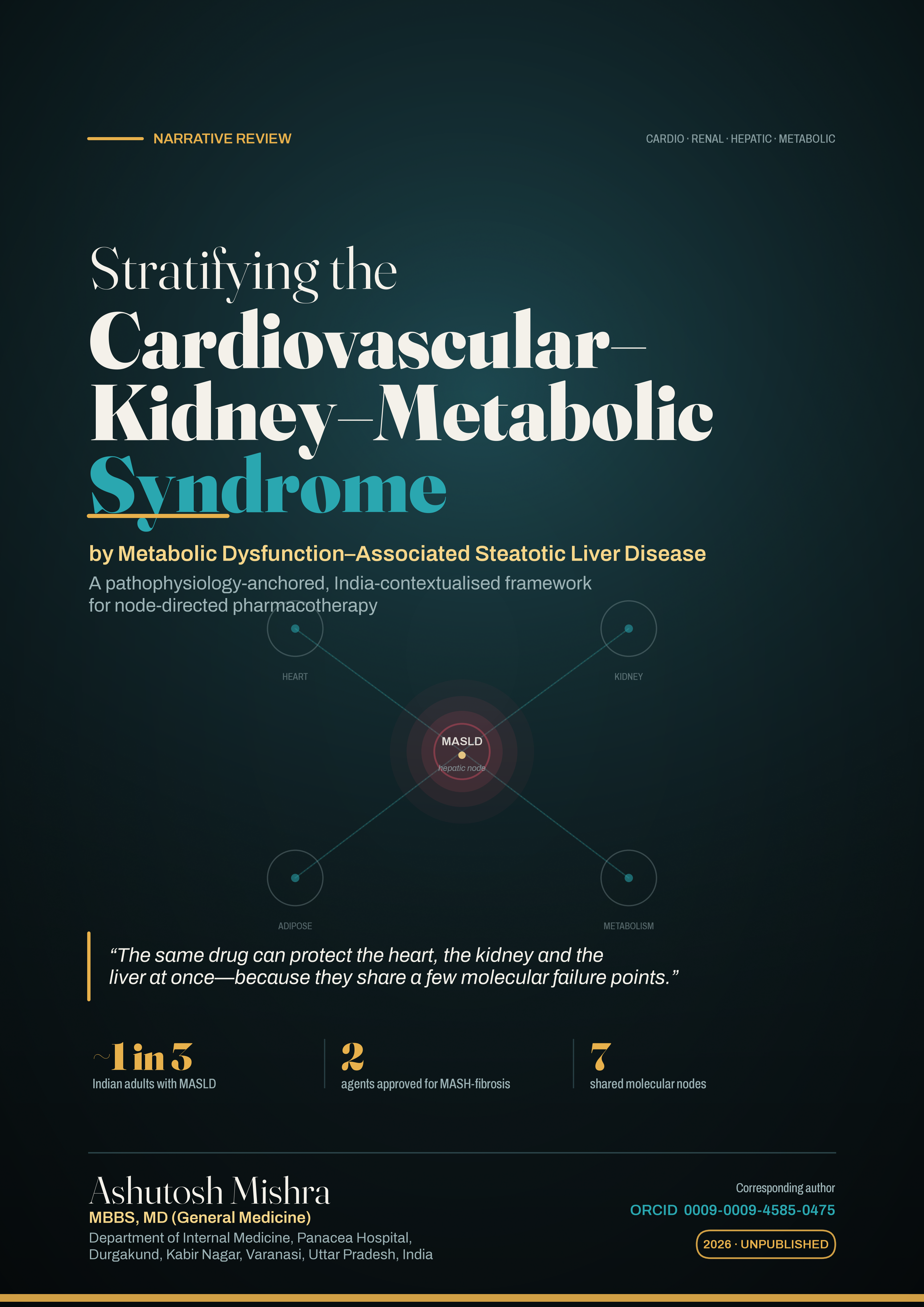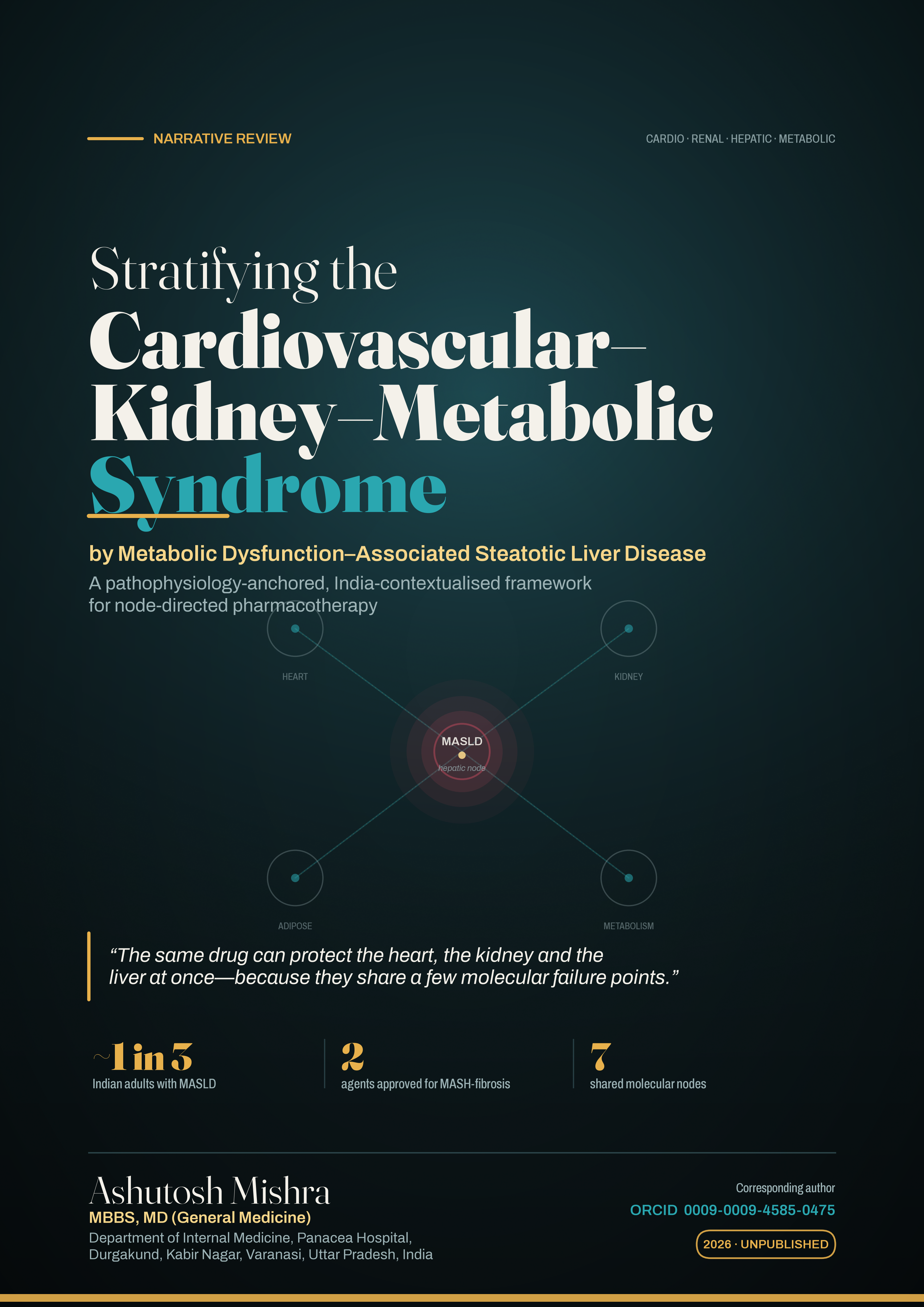

Vol. 5 No. 1 (2026): Stratifying Cardiovascular–Kidney–Metabolic Syndrome by Metabolic Dysfunction-Associated Steatotic Liver Disease: A Pathophysiology-Anchored, India-Contextualised Framework for Node-Directed Pharmacotherapy
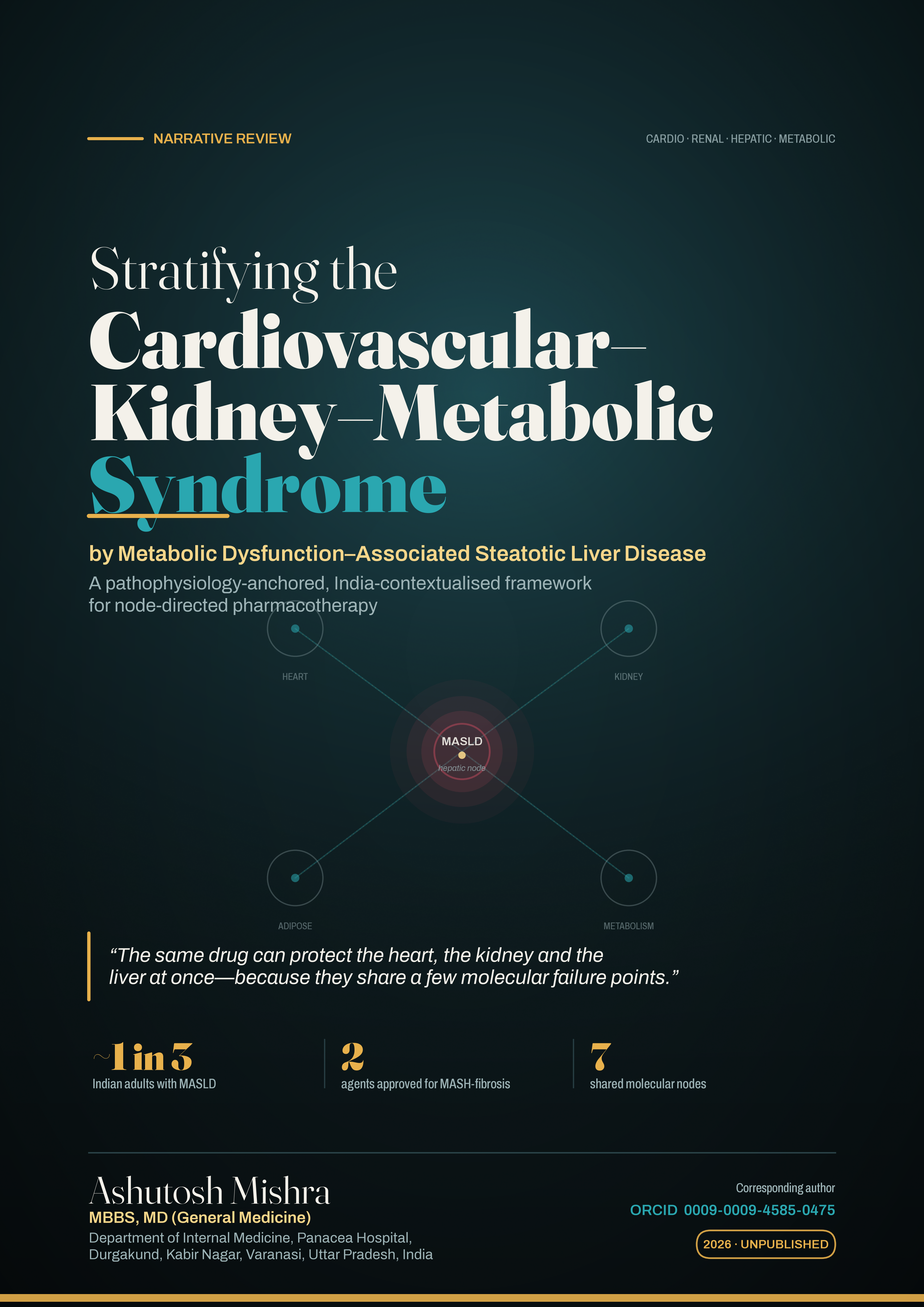
This narrative review proposes a pathophysiology-anchored framework that positions metabolic dysfunction-associated steatotic liver disease (MASLD) as the hepatic node within cardiovascular–kidney–metabolic (CKM) syndrome. It argues that liver fibrosis, rather than organ labels alone, should modify CKM risk stratification and guide pharmacotherapy. By integrating adipose lipotoxicity, hepatic de novo lipogenesis, stellate-cell fibrogenesis, inflammasome activation, mineralocorticoid signaling, cardiorenal hemodynamics, and the gut–liver axis, the paper links shared molecular pathways across liver, heart, kidney, and adipose tissue. It then maps contemporary therapies—including GLP-1 receptor agonists, SGLT2 inhibitors, pioglitazone, resmetirom, FGF21 analogues, finerenone, bempedoic acid, and colchicine—onto these nodes rather than specialty silos. The review also contextualizes the framework for India, where phenotype, genetics, diet, and drug access may alter clinical application. Overall, it advances a fibrosis-stage–based therapeutic ladder for individualized cardiorenal-metabolic care