ADA 2026 GLP-1 Pipeline: Retatrutide, CagriSema, Orforglipron The next wave of incretin therapies unveiled in New Orleans
Keywords:
Retatrutide, CagriSema (cagrilintide‑semaglutide), Orforglipron (oral GLP‑1), Multiagonist efficacy, Safety surveillanceAbstract
Abstract
Background: The ADA 2026 Scientific Sessions highlighted a rapid advance in incretin pharmacotherapy, with highly potent multiagonists and an emerging oral GLP‑1 candidate poised to alter treatment paradigms for obesity and cardiometabolic disease.
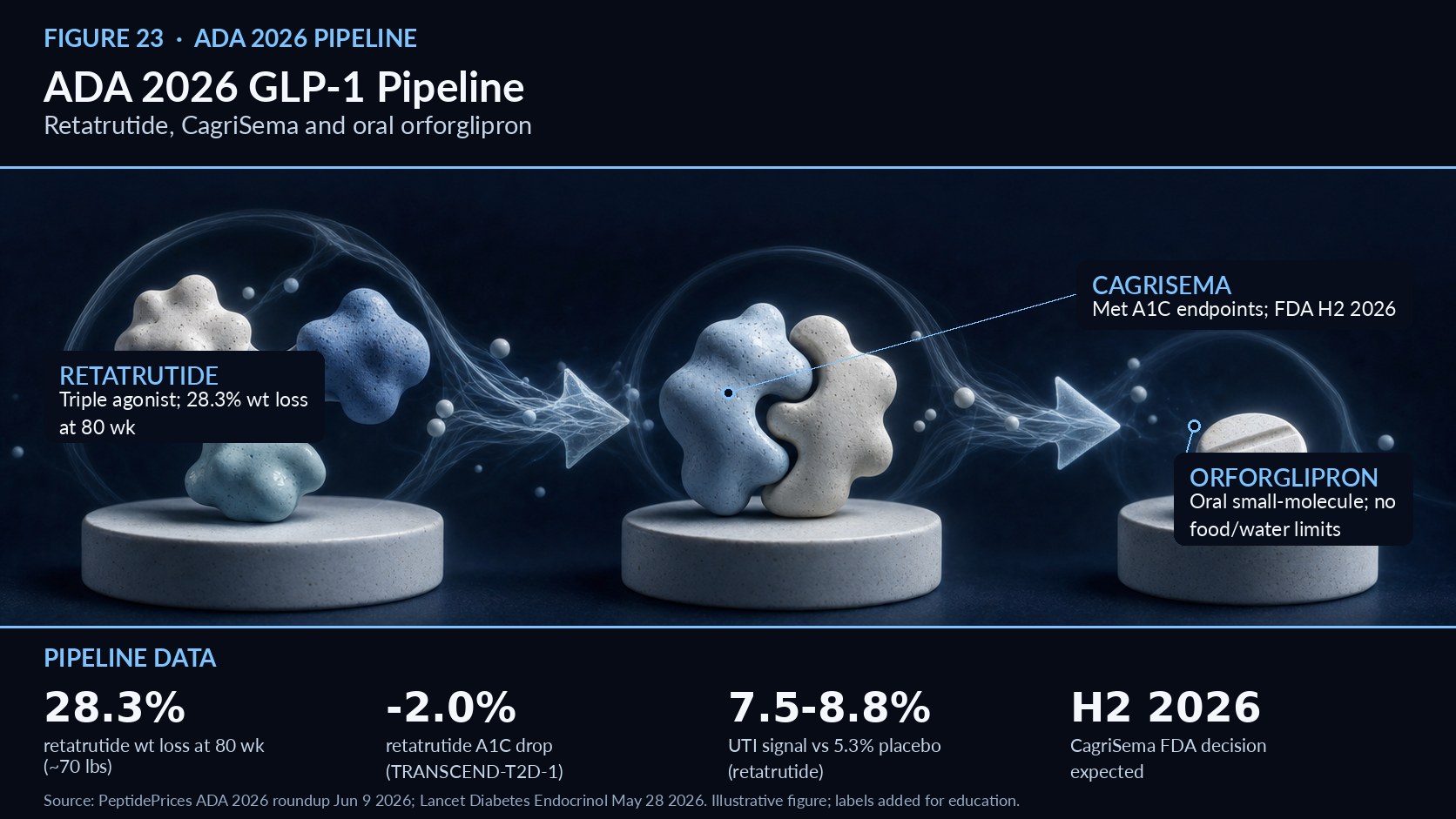
Methods and scope: This newsletter summarises headline data presented at ADA 2026 for leading pipeline agents—retatrutide (GLP‑1/GIP/glucagon triple agonist), CagriSema (cagrilintide combined with semaglutide), and orforglipron (oral small‑molecule GLP‑1)—integrating trial outcomes, safety signals, and regulatory status.
Findings: Retatrutide’s TRIUMPH‑1 trial reported mean body‑weight reductions of 28.3% at 80 weeks, with nearly half of high‑dose participants achieving ≥30% weight loss; TRANSCEND‑T2D‑1 showed A1C reductions up to 2.0% and weight loss up to 16.8% at 40 weeks. A modest excess of urinary tract infections among retatrutide recipients (≈7.5–8.8% vs 5.3% placebo) represents an early safety signal. CagriSema met primary glycaemic and secondary weight endpoints across REIMAGINE trials; regulatory review timelines point to potential approvals in 2026. Orforglipron (Foundayo) offers an oral, no‑food‑restriction GLP‑1 option that could improve uptake and adherence, though detailed efficacy data were not provided in the round‑up. These developments narrow the gap between pharmacotherapy and bariatric outcomes while diversifying delivery forms.
Conclusions: The ADA 2026 pipeline signals a new era of potency and convenience in incretin therapy, with important implications for CKM practice. Enhanced efficacy must be balanced against emerging agent‑specific safety profiles and the necessity for robust post‑marketing surveillance.