
Vol. 4 No. 13 (2026): Balancing Finerenone Efficacy Against Hyperkalemia Getting organ protection while keeping potassium safe
Description
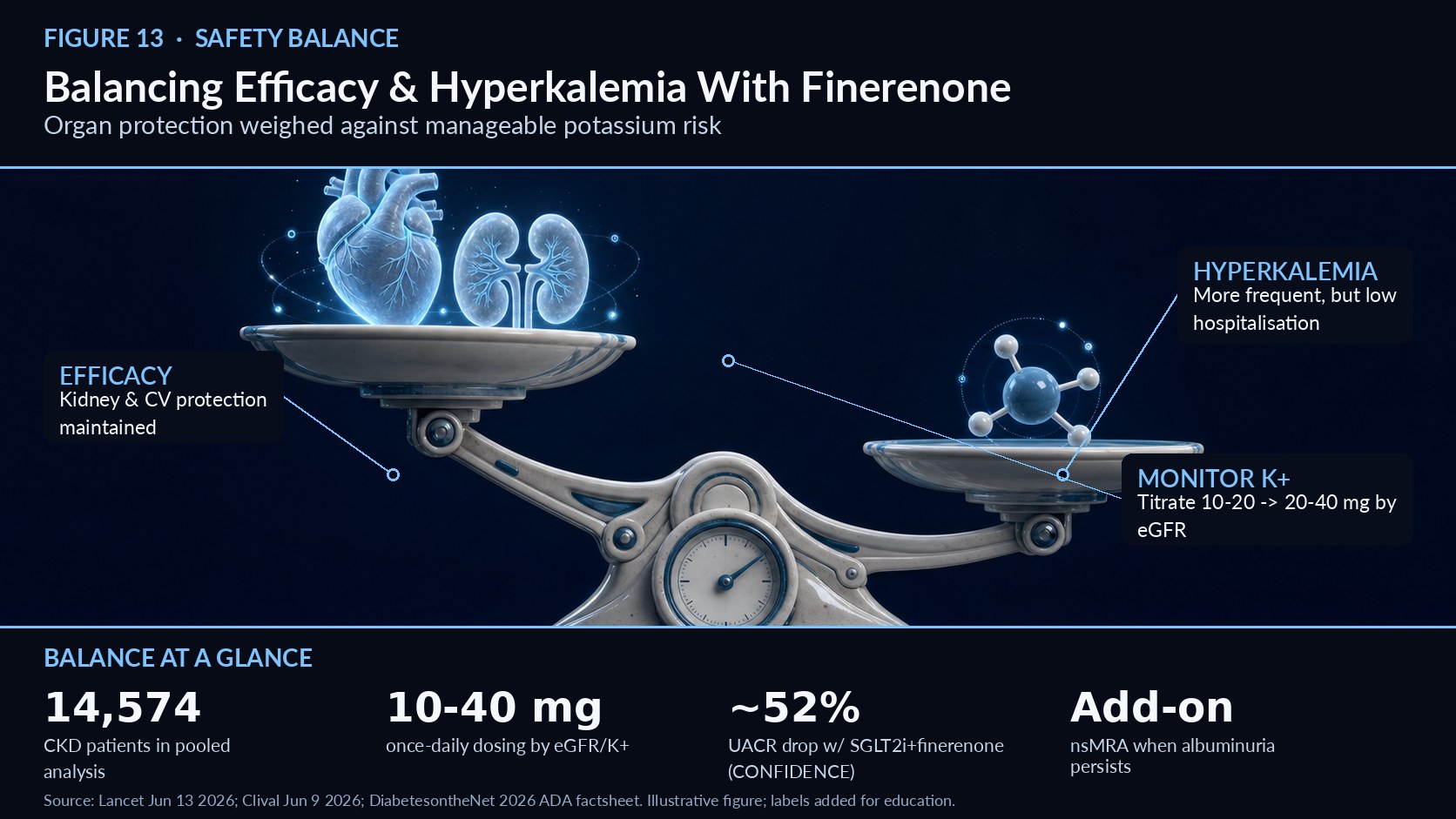
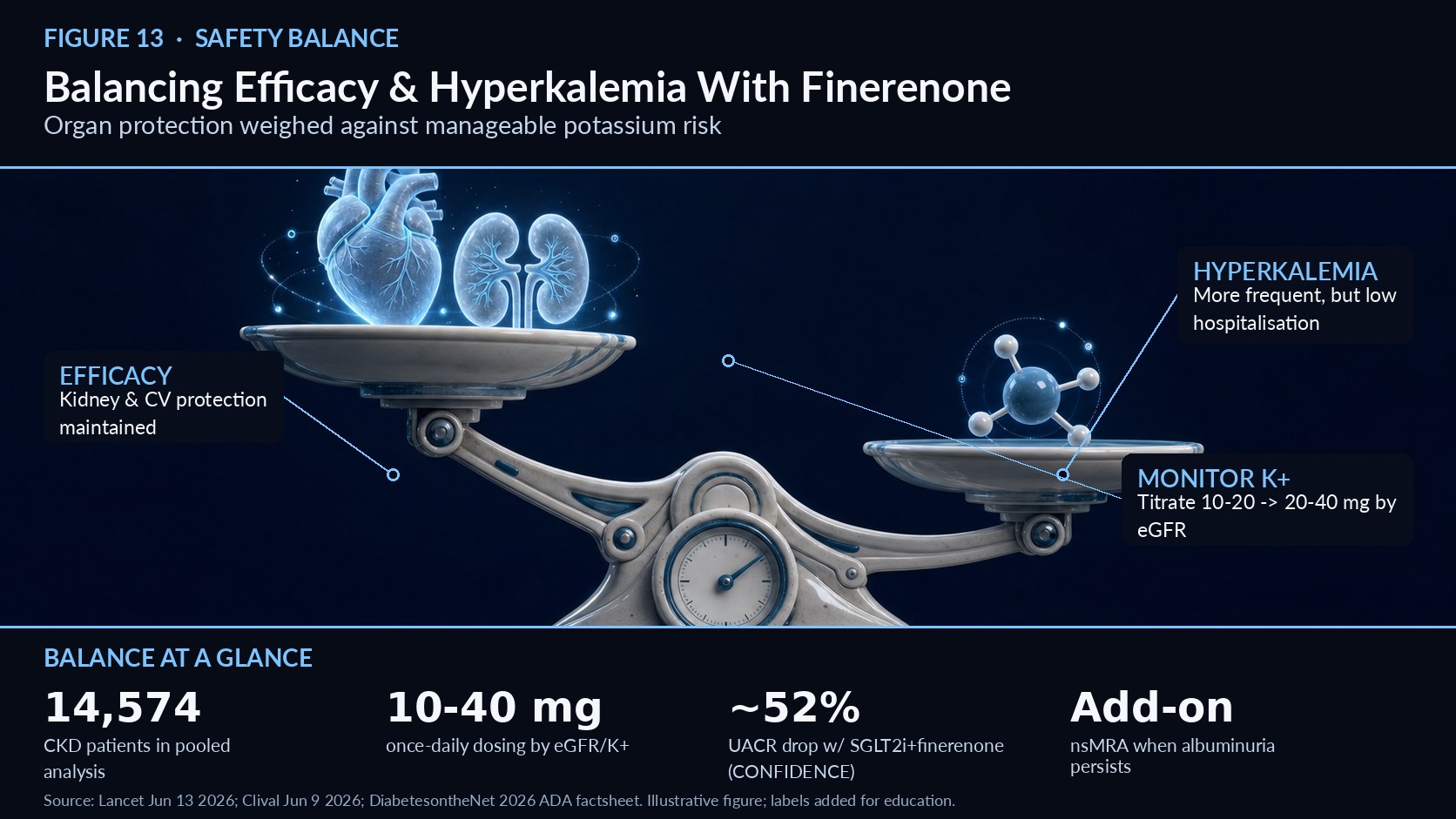
Finerenone’s main practical limitation is hyperkalaemia, but the 2026 evidence base shows that the risk is real, measurable, and manageable with structured monitoring. In the pooled CKD analysis, hyperkalaemia occurred more often with finerenone than placebo, yet hyperkalaemia leading to hospitalisation remained uncommon, supporting vigilance rather than avoidance. Trial-based dosing starts at 10–20 mg once daily and is titrated to 20–40 mg according to eGFR, with potassium checks before treatment, after each dose increase, and periodically thereafter to keep most patients in a safe range. INFINITY also reported a favourable safety profile across CKD populations, suggesting that safety is consistent rather than restricted to select subgroups. SGLT2 inhibitors are helpful partners because they preserve kidney function and may reduce hyperkalaemia risk, making co-therapy a practical way to improve tolerance to RAAS blockade and finerenone. With eGFR-guided dosing, scheduled potassium surveillance, and thoughtful sequencing, most CKM patients can receive finerenone’s kidney and cardiovascular benefit safely.pubmed.ncbi.nlm.nih+6