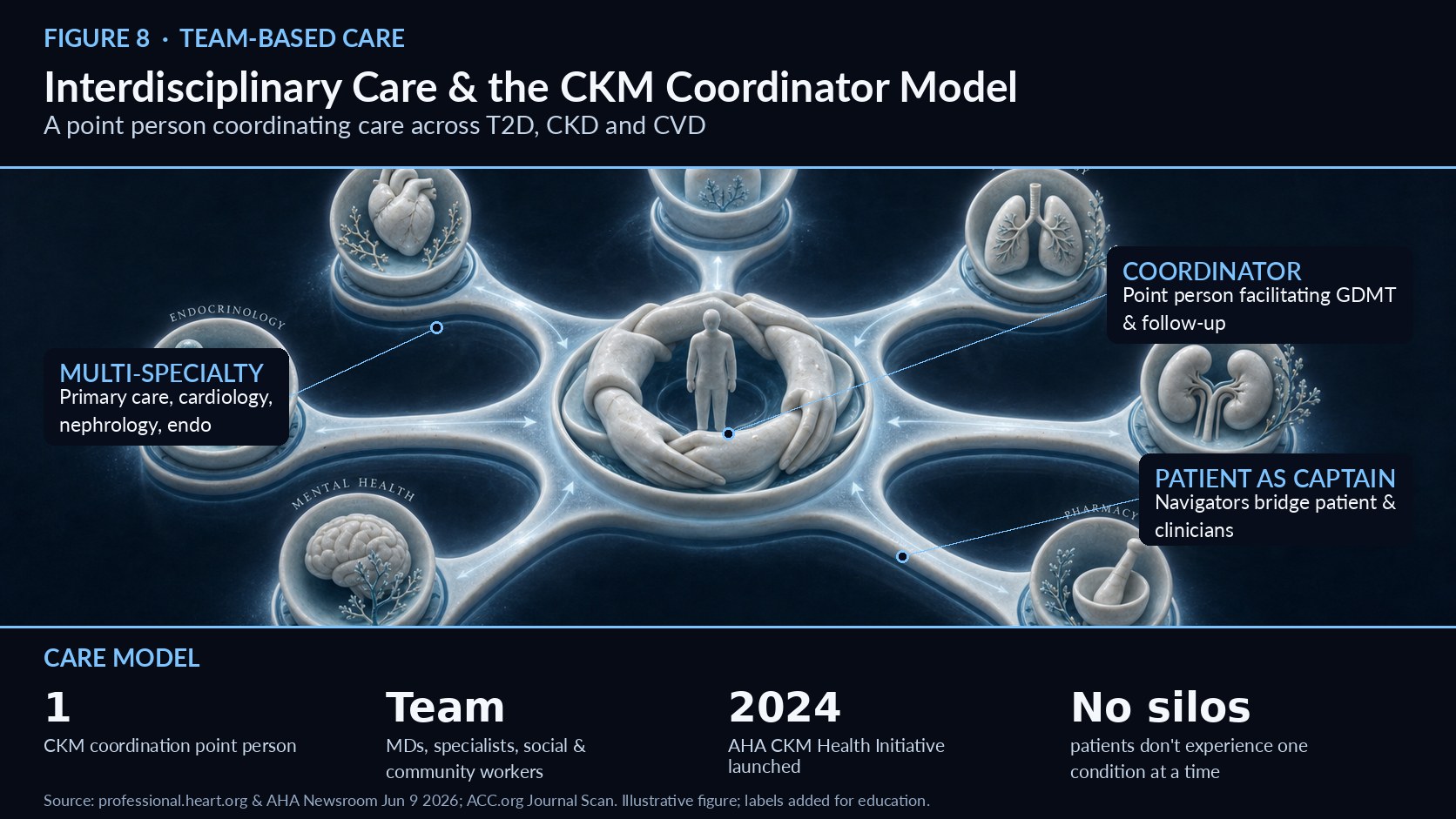

Interdisciplinary Care and the CKM Coordinator Model A named point person to break down clinical silos and drive guideline-directed therapy
Keywords:
CKM coordinator, Interdisciplinary care, Guideline-directed medical therapy, Care coordination, Therapeutic inertia, Multiorgan diseaseAbstract
Abstract
Background: Cardiovascular, kidney, and metabolic (CKM) conditions frequently coexist, producing overlapping morbidity that fragments care across specialties and settings. The 2026 CKM guideline responds by elevating team-based, interdisciplinary management and recommending a named CKM coordination point person to integrate care.
Intervention: The CKM coordinator model designates a single accountable clinician—often a nurse navigator, pharmacist, or care manager—who links patients, primary care, specialists (cardiology, nephrology, endocrinology), social services, and community health workers. Core tasks include arranging follow-up, reconciling and titrating guideline-directed medical therapy (GDMT), monitoring adherence and adverse effects, facilitating lifestyle interventions, and addressing social determinants that impede care.
Outcomes and benefits: Centralizing responsibility reduces therapeutic inertia and loss to follow-up, increases delivery of organ-protective therapies, and streamlines multidisciplinary decision-making. Coordinated workflows and shared care pathways improve efficiency and patient experience while enabling measurement of process and outcome metrics important to administrators.
Implementation considerations: Effective deployment requires role definition, training, electronic communication pathways, pharmacist involvement for medication review, and metrics for GDMT uptake and clinical outcomes. Challenges include resourcing, cross-disciplinary culture change, and interoperable records. Conclusion: The CKM coordinator model offers a practical, scalable strategy to translate guideline recommendations into measurable improvements for patients with complex, multisystem cardiometabolic disease.