
Vol. 4 No. 16 (2026): SGLT2 Inhibitor Safety Signals in FAERS Ketoacidosis and other adverse events across 154,476 spontaneous reports
Description
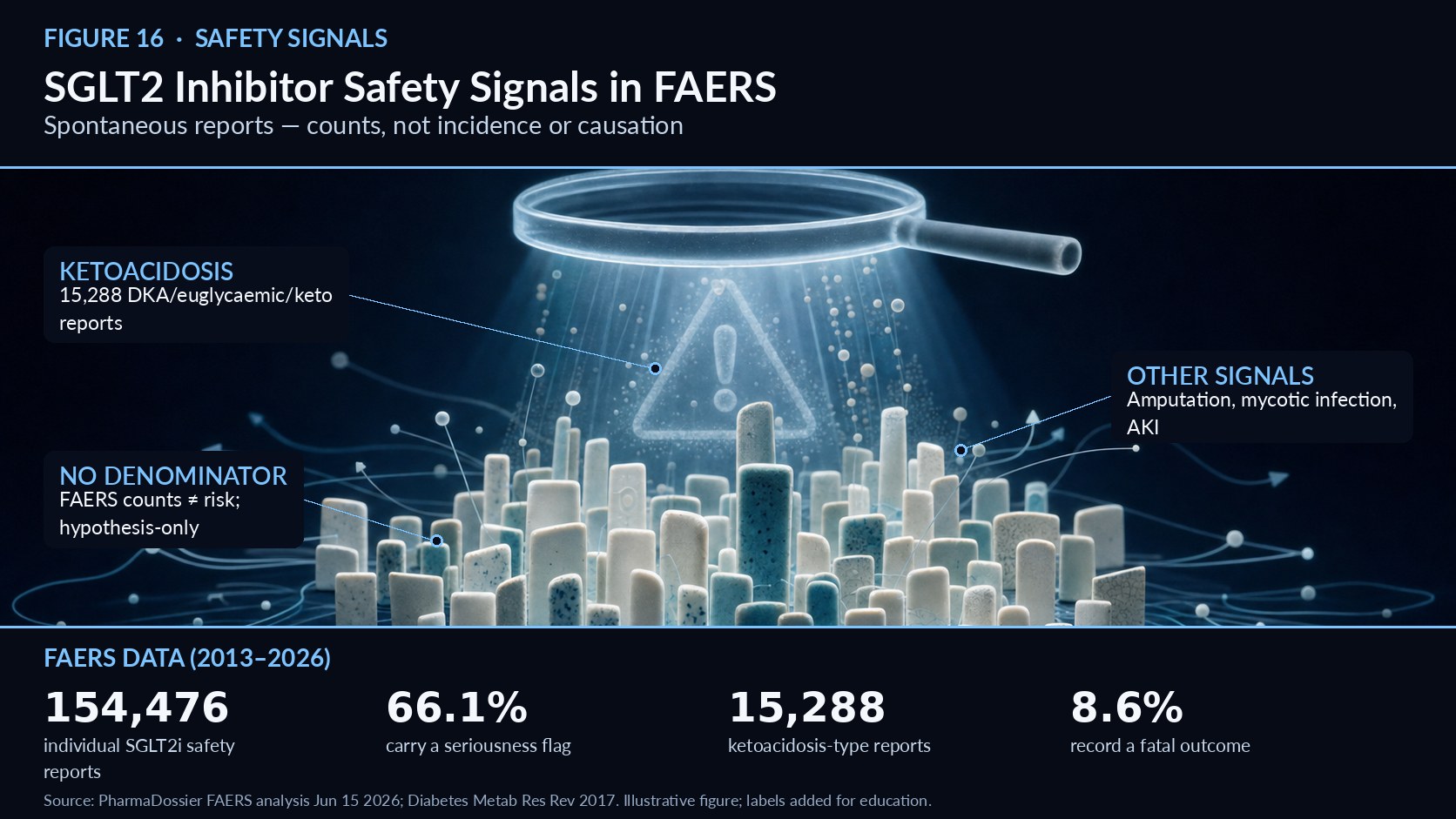
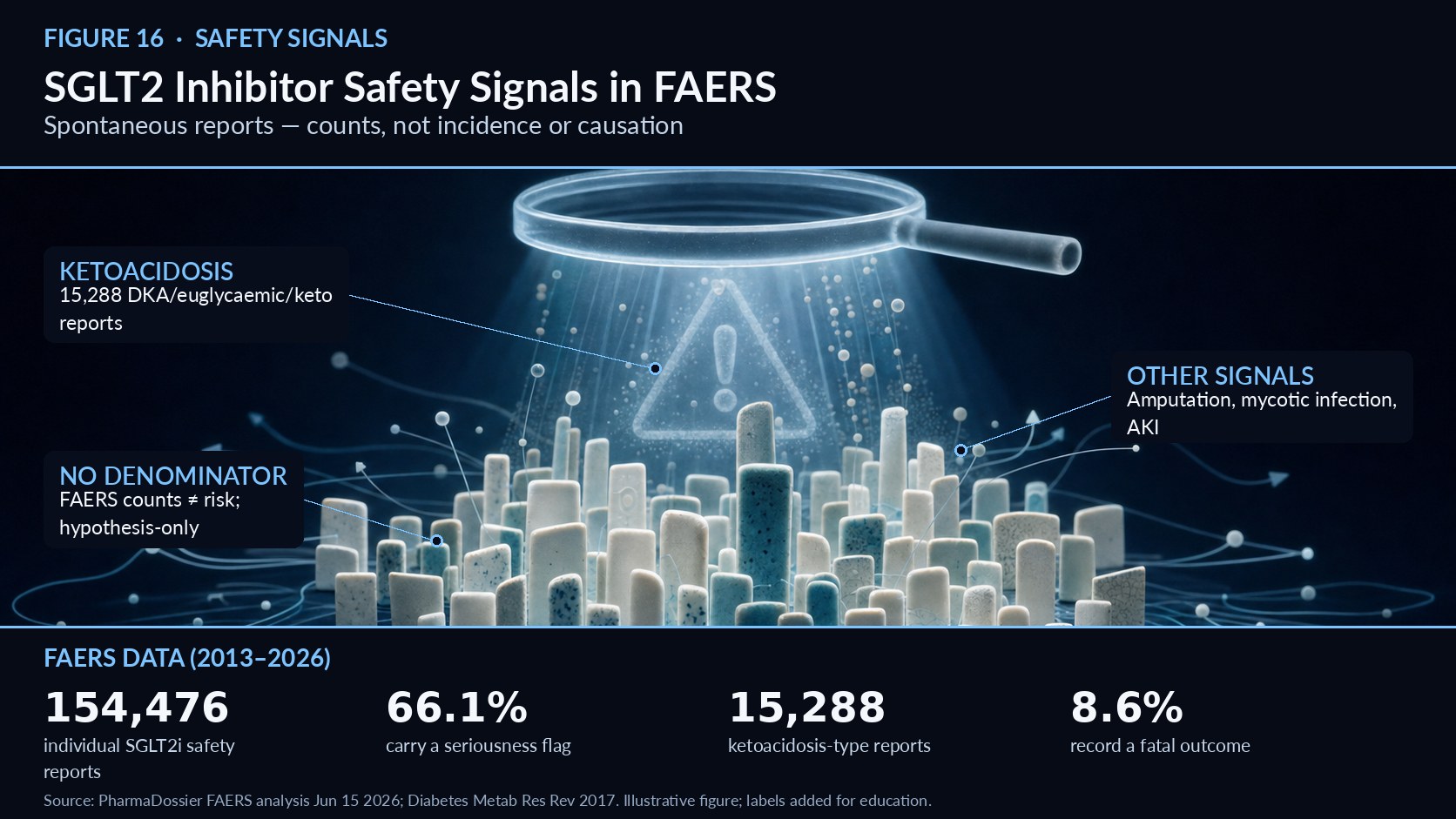
A June 2026 FAERS extract of 154,476 reports (2013–early 2026) highlights real‑world safety signals for SGLT2 inhibitors (empagliflozin, dapagliflozin, canagliflozin, ertugliflozin, bexagliflozin). Reports were frequently serious (66.1%) with 8.6% fatal outcomes, reflecting reporting bias toward severe events. Diabetic ketoacidosis was the dominant signal (15,288 reports), including 3,108 euglycaemic DKA cases—a particular clinical concern because normal glucose can delay recognition. Other notable signals included volume depletion/acute kidney injury (9,162), genital mycotic infections (5,385), lower‑limb amputation (4,819), and rare Fournier’s gangrene (630). Disproportionality analyses previously reported markedly higher acidosis reporting versus DPP‑4 inhibitors, reinforcing vigilance. FAERS counts do not represent incidence or prove causality but are valuable for risk mitigation. Clinical implications: continue using SGLT2 inhibitors for their proven cardiorenal benefits while implementing structured patient education, sick‑day guidance, perioperative holds, careful volume management, and a low threshold for ketone testing in unwell patients on SGLT2 therapy.