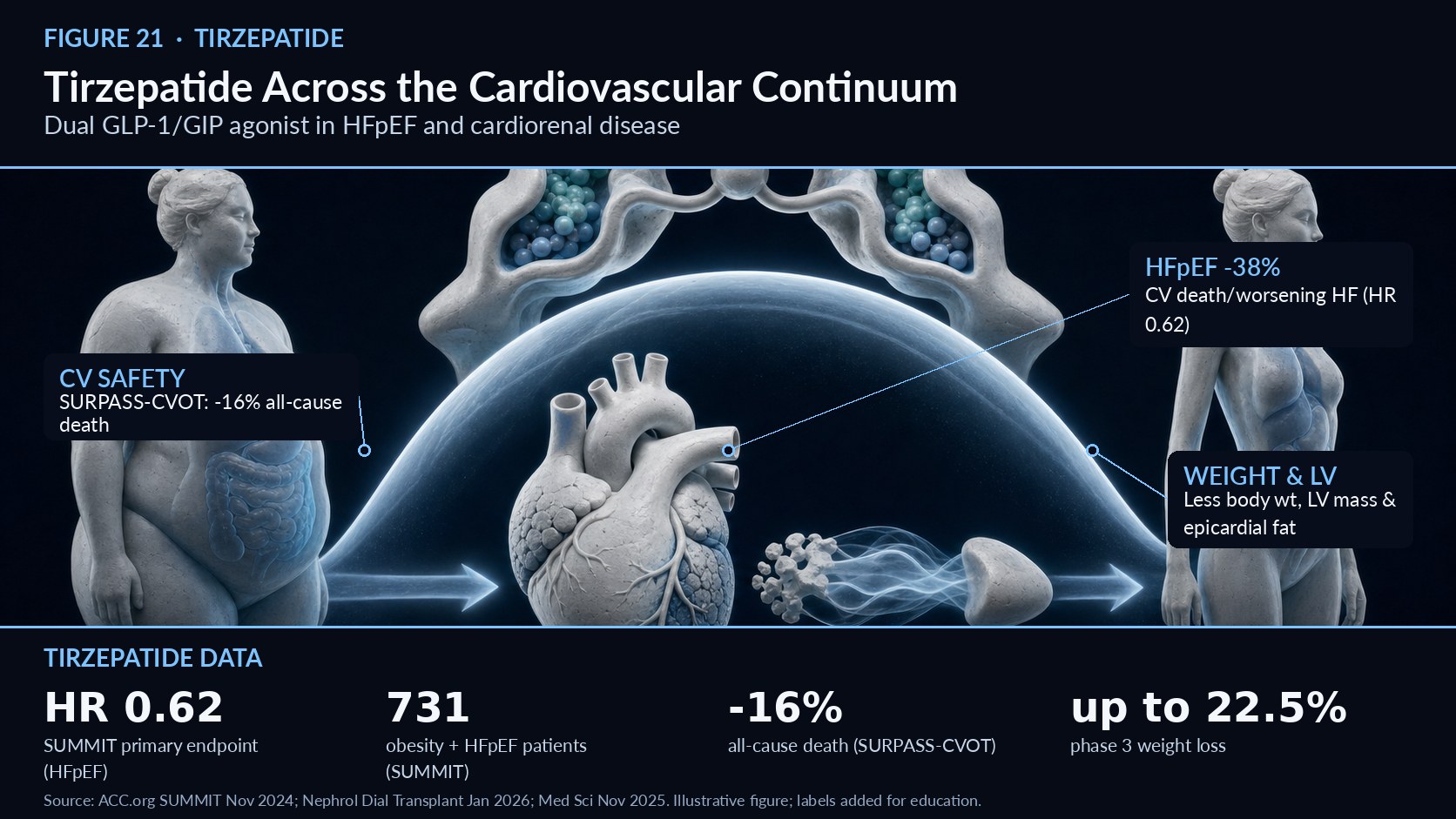

Tirzepatide Across the Cardiovascular Continuum From HFpEF to cardiorenal protection with a dual GLP-1/GIP agonist
Keywords:
Tirzepatide, HFpEF, Obesity-related HF, Cardiovascular outcomes, Reverse remodelingAbstract
Abstract
Tirzepatide, a dual GLP-1/GIP receptor agonist, is emerging as a disease-modifying therapy across the cardiovascular continuum, particularly in obesity-related HFpEF and broader cardiovascular-kidney-metabolic (CKM) disease. In the SUMMIT trial, 731 patients with obesity and HFpEF were randomized to tirzepatide or placebo; over a median follow-up of about two years, tirzepatide reduced cardiovascular death or worsening heart-failure events by 38% and improved symptoms, exercise capacity, and health status. The treatment also produced substantial weight loss, lowered inflammatory burden, and showed favorable reverse-remodeling signals, including reduced left-ventricular mass and paracardiac adipose tissue. SURPASS-CVOT further confirmed cardiovascular safety compared with dulaglutide and demonstrated a reduction in all-cause mortality. Together, these findings position tirzepatide as more than a glucose- or weight-lowering therapy: it addresses obesity, heart-failure symptoms, and hard cardiovascular outcomes. The 2026 CKM guideline reflects this evolution by incorporating GLP-1-based therapies, including dual agonists, for patients with obesity or other CKM risk factors, especially when HFpEF is present.