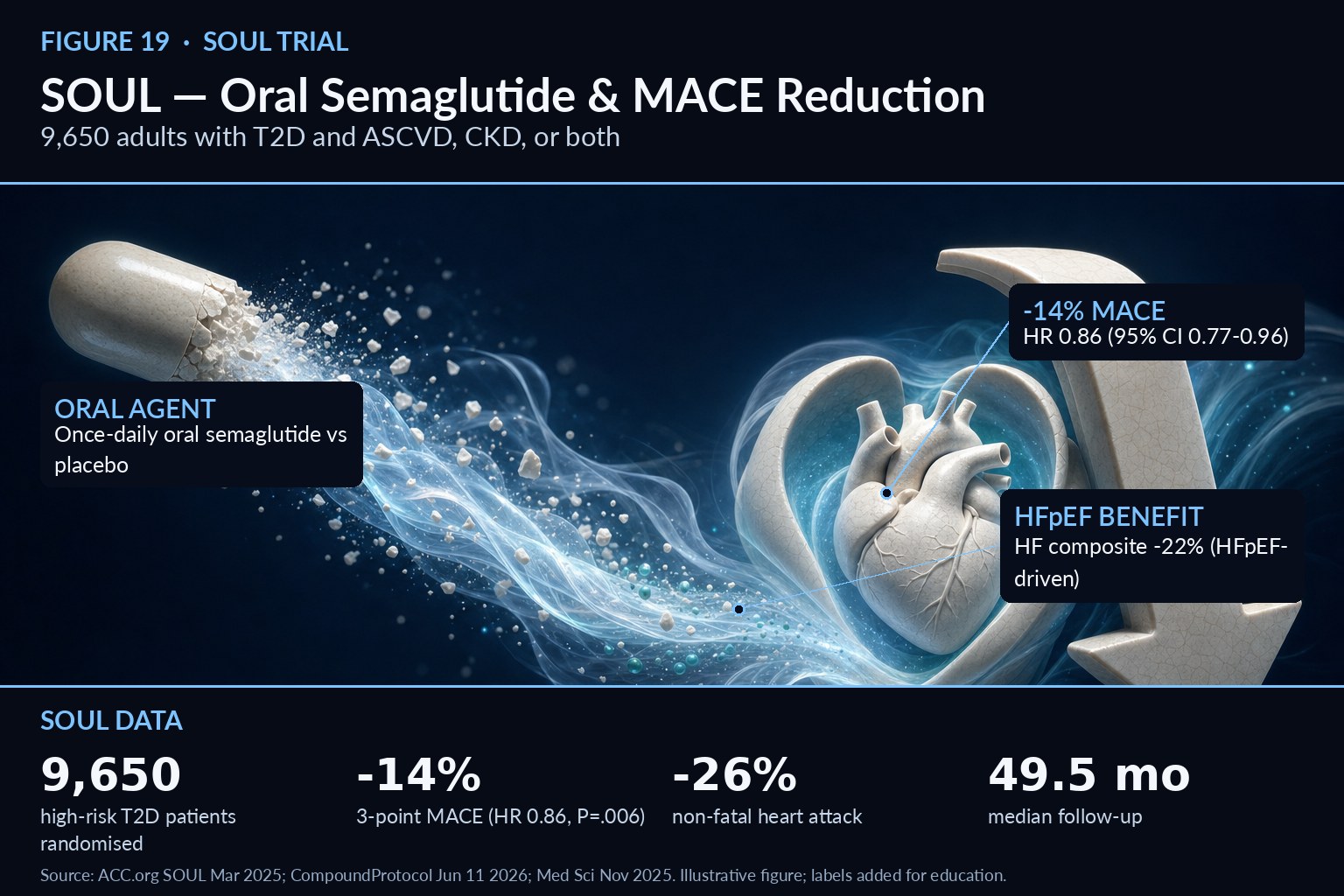

SOUL Trial: Oral Semaglutide and MACE Reduction Cardiovascular protection from an oral GLP-1 in high-risk type 2 diabetes
Keywords:
Oral semaglutide, MACE reduction, Myocardial infarction, Heart failure phenotype, CKM populationAbstract
Abstract
The SOUL trial evaluated whether oral semaglutide reduces major adverse cardiovascular events in high‑risk patients with type 2 diabetes and established atherosclerotic cardiovascular disease, chronic kidney disease, or both. In this randomized, double‑blind trial of 9,650 participants (4,825 per arm) followed for a median of 49.5 months, oral semaglutide produced a statistically significant 14% reduction in the primary three‑point MACE composite (all‑cause death, nonfatal myocardial infarction, or nonfatal stroke) compared with placebo (12.0% vs 13.8%; HR 0.86; 95% CI 0.77–0.96; P=0.006). Secondary analyses demonstrated a pronounced effect on myocardial infarction (≈26% reduction) and a 22% reduction in a heart‑failure composite among those with baseline heart failure, a benefit concentrated in HFpEF (HR 0.59) rather than HFrEF (HR 0.98). The trial’s design intentionally mirrors the CKM population, enhancing generalisability to patients with overlapping cardiometabolic and renal disease. The oral route offers important pragmatic advantages—improved acceptability for people who avoid injections and reduced logistical barriers to access—without new safety concerns identified in the primary report. Collectively, SOUL demonstrates that the cardiovascular protection attributable to GLP‑1 receptor agonism extends to an oral formulation, supporting inclusion of oral semaglutide as a therapeutic option for cardiovascular risk reduction in high‑risk type 2 diabetes.