
What We Offer?
- Peer-Reviewed Research: Cutting-edge studies, clinical trials, and systematic reviews spanning diabetes, cardiology, nephrology, and intersecting technologies.
- Innovative Technology Highlights: Original research and commentary on digital health, artificial intelligence, remote patient monitoring, and modern diagnostics that are shaping the future of holistic care.
- Expert Perspectives: Opinion pieces, consensus guidelines, and case discussions from leading clinicians and researchers working at the forefront of cardio-diabetes-renal medicine.
- Global Community: A vibrant, interdisciplinary space for collaboration, knowledge sharing, and professional development.
Why Diabzen?
With the rapid evolution of medical science and digital health, Diabzen curates the latest advances in one convenient, high-impact forum. We invite physicians, scientists, allied health professionals, and industry leaders to join our community—contributing to an evidence-based, patient-centered future and elevating standards of care for millions worldwide.
Submit. Discover. Innovate.
Whether you are looking to share new research, stay updated with clinical breakthroughs, or engage with a global network of experts, Diabzen is your gateway to progress in cardio-diabetes-renal medicine and beyond.
Explore the latest issue, submit your work, or learn more about our mission. Together, let’s shape the future of integrated healthcare.
Diabzen: Advancing Care at the Core.
Current Issue
Description
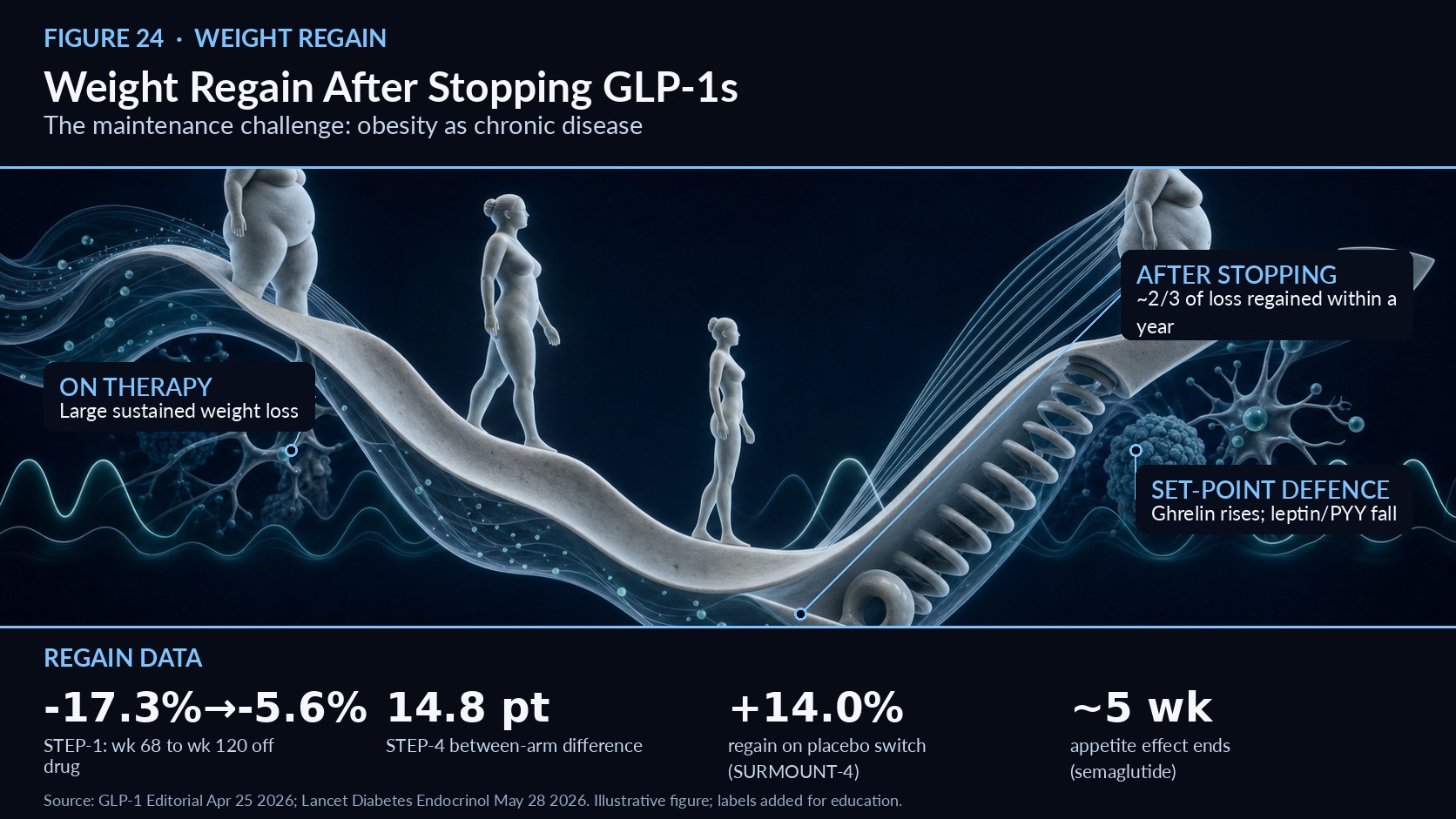
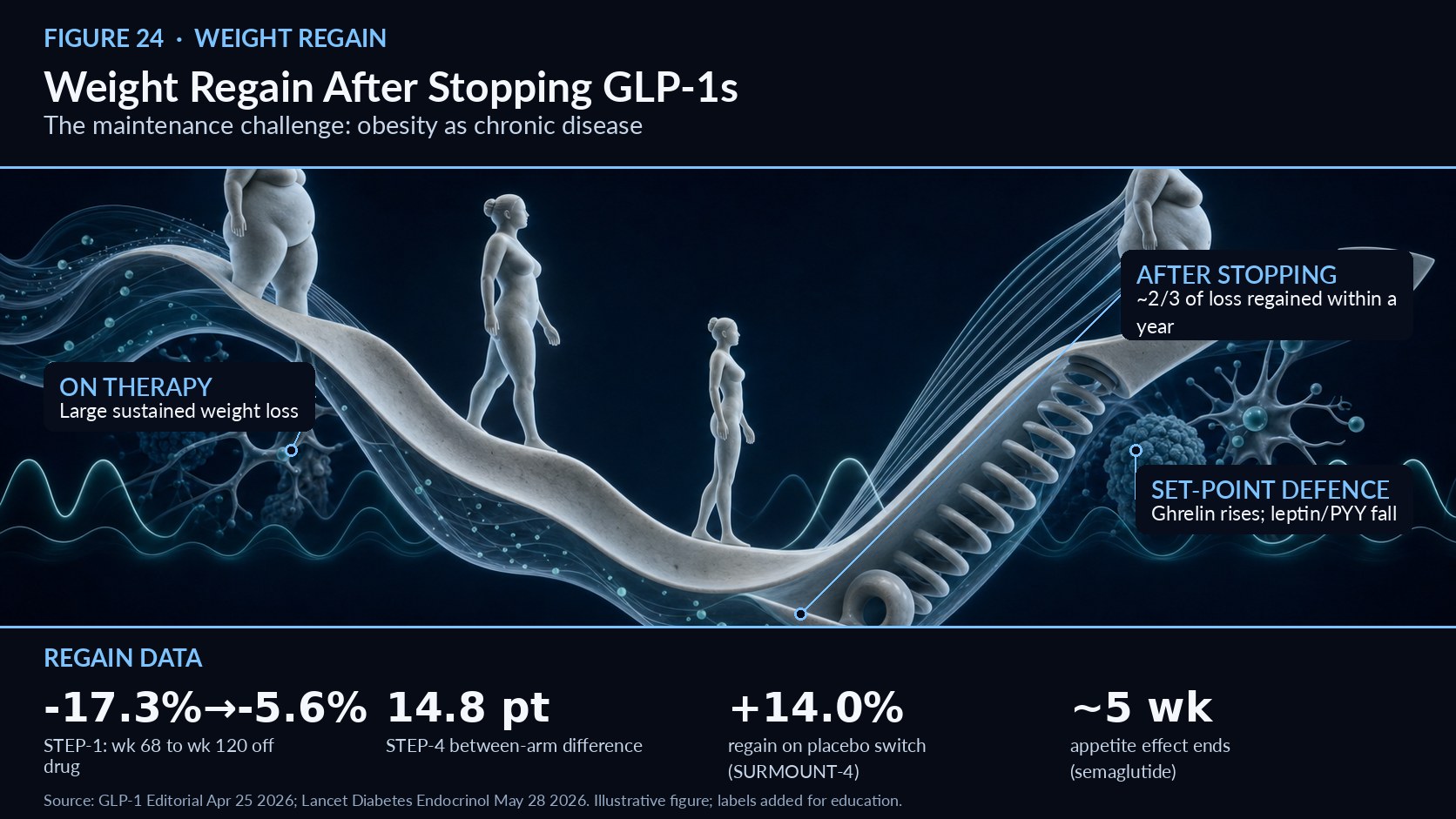
Evidence from STEP‑1, STEP‑4, and SURMOUNT‑4 shows that stopping GLP‑1 or multiagonist therapy commonly causes substantial weight regain and reversal of cardiometabolic gains. In STEP‑1’s extension, semaglutide participants lost −17.3% at week 68 but lost only −5.6% at week 120 after discontinuation, recouping roughly two‑thirds of lost weight within a year. STEP‑4 and SURMOUNT‑4 provide controlled confirmation: continued therapy produced further loss while placebo‑switch arms rapidly regained weight (between‑arm differences ~14.8 percentage points and 19.5 percentage points, respectively). Metabolic markers—waist circumference, blood pressure, HbA1c, lipids—reverted alongside weight. Mechanistically, appetite returns within weeks, and adaptive thermogenesis plus hormonal shifts (↑ghrelin, ↓leptin/PYY) defend a higher set point, making relapse biological rather than behavioural. These findings support framing obesity pharmacotherapy as a long‑term, disease‑modifying treatment that requires planning for sustained use, monitoring for safety, and realistic patient counselling—especially where cost and access constrain continuous therapy.